
If you or someone you love is missing teeth, dentures can restore a natural-looking smile and make eating and speaking easier. But not all dentures are the same. Understanding the difference between full and partial dentures can help you ask the right questions and feel more confident about your options.
What Are Full Dentures?
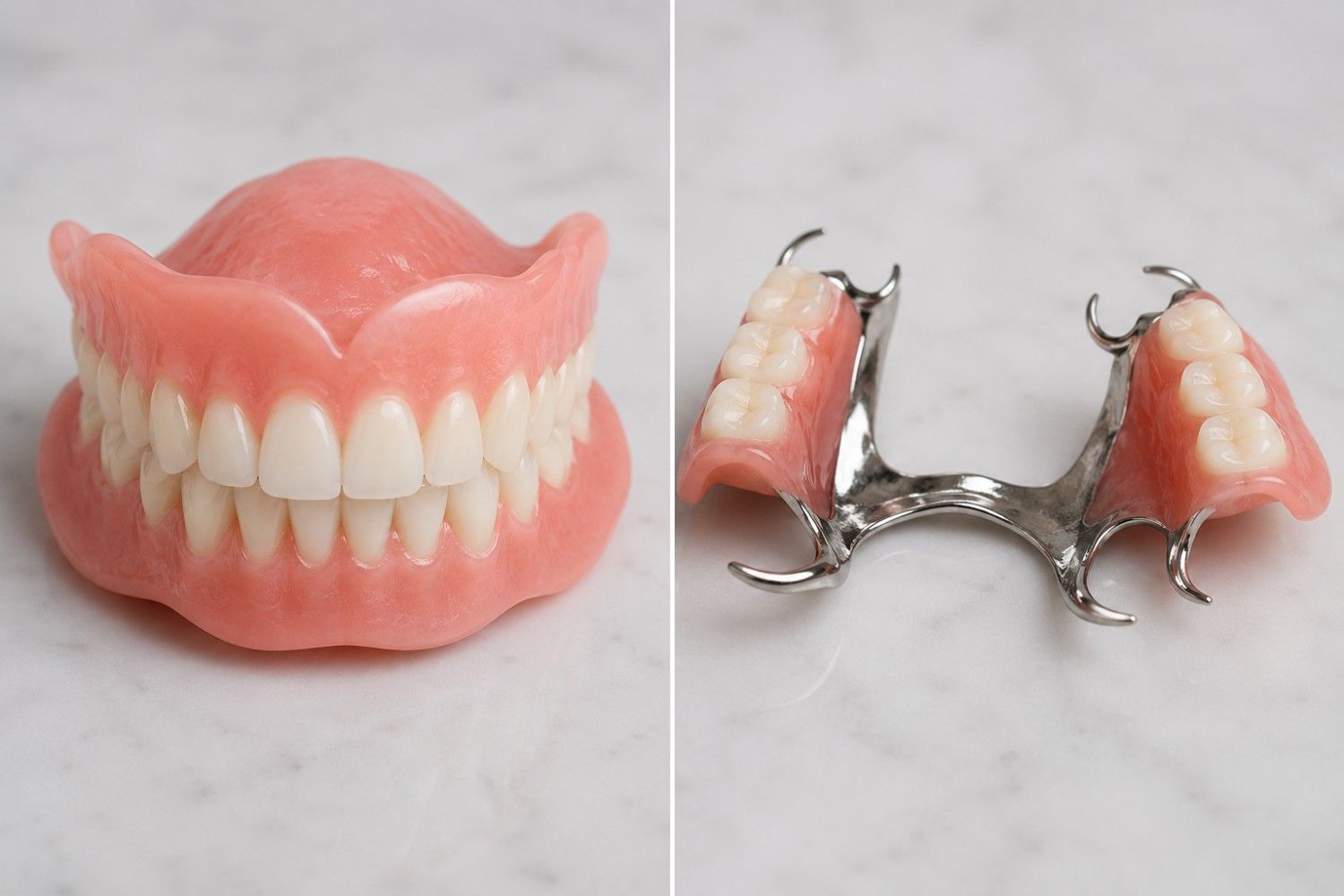
Full dentures, also called complete dentures, replace all the teeth in the upper jaw, the lower jaw, or both. They are used when a person has lost all or nearly all natural teeth in one arch.
Full dentures rest on the gum tissue and are held in place by natural suction or denture adhesive. They are removable, so you take them out at night for cleaning.
If you have been searching for dentures near you, a dentist will first assess whether you need full or partial dentures based on how many teeth remain.
What Are Partial Dentures?
Partial dentures are used when some natural teeth still remain. A partial denture fills only the gaps left by missing teeth.
They attach to remaining teeth using metal clasps or precision attachments, keeping the partial denture stable during eating and speaking.
Partial dentures fill the visible gaps in your smile and also prevent remaining teeth from shifting into empty spaces over time.
Key Differences at a Glance
Factor | Full Dentures | Partial Dentures |
Who they are for | Missing all teeth in an arch | Missing some teeth |
Support | Rests on gum tissue | Attaches to remaining teeth |
Purpose | Replaces the entire arch | Fills specific gaps |
| Removable | Yes | Yes |
How Are Dentures Made and Fitted?
Whether full or partial, getting dentures involves multiple appointments. Your dentist near you will take impressions, measure your bite, and work with a dental lab to create a precise fit.
Once ready, the dentures are adjusted at a fitting appointment. A few small tweaks in the following weeks are normal as your mouth adapts.
Caring for Your Dentures
Proper care helps dentures last longer. Here are some simple habits:
- Rinse dentures after every meal
- Brush gently daily with denture cleaner
- Soak overnight in denture solution
- Never use hot water — it can warp the shape
- Keep brushing your gums and any remaining teeth
Over time, changes to your jawbone and gums may mean dentures need relining or replacing.
A Comfortable Smile Starts Here—Visit 17th Ave Dental Choice
The right dentures can restore your smile and your confidence. Professional guidance is what makes the difference.
At 17th Ave Dental Choice, the team is ready to help you find the best solution for your smile. Book your consultation today and take the first step toward a smile you feel good about.
Frequently Asked Questions
Q1: How long does it take to get used to dentures?
It usually takes a few weeks to get used to dentures; it may take up to 2 months to feel completely at ease.
Q2: Can I eat normally with dentures?
Yes, but starting with softer foods and smaller pieces makes the adjustment easier.
Q3: How often should dentures be replaced?
Dentures typically last 5 to 10 years. Regular check-ups help determine when a reline or replacement is needed.
Q4: Do I still need a dentist if I have full dentures?
Yes. Visits are still important to check the fit and monitor the health of your gums and jawbone.